

Curious how hearing aids actually help you hear better? Discover how they capture and enhance sound, helping you stay connected to the moments that matter.

A brief history of hearing aids
The earliest form of hearing aids were ear trumpets. Usually made of metal and wood, these tubular or funnel-shaped devices were used to direct sounds directly into the ears.
Later, with the invention of the telephone and microphone in the 1870s and 1880s, electronic hearing aids arrived and quickly gained popularity. These required a sound receiver, which was often the size of a large cigar box, with a speaker that fitted in the ear.
Since then, hearing aids have become smaller and more portable, and with the invention of microprocessors and microcomputers brought digital hearing aids — with the first behind-the-ear (BTE) hearing aids arriving in the late 80s.
Modern digital hearing aids: common features
Modern digital hearing aids have a number of features that can help the user navigate their day-to-day lives with more ease. These range from selectively blocking out certain sounds such as background noises to offering the ability to stream music and phone calls directly to the hearing aids. More specifically, modern hearing aids often have the following features:
Directional microphones
Automatic directionality provides you with the benefit of picking up speech over background noise like traffic or music in a restaurant. Hearing aids with directional microphones can selectively tune in and tune out certain noises in the environment. Some directional microphones tune out the noises coming from behind you, while others tune out noises selectively from moving sources, such as cars or passing bikes.
Automatic directional microphones
Automatic directional microphones operate according to the listening environment. In a quiet situation they’ll operate in directional mode and adaptive directional mode, if available.
Adaptive directional microphones
This microphone can detect the location of the strongest noise source and minimise it. If the noise source moves, like a motorbike on the road, then the microphone system adapts to keep that noise reduced.
Noise reduction
This reduces the amplification of non-speech sounds, making it more comfortable in noisy conditions by automatically sensing and then reducing the background noise. So you can better concentrate, or enjoy conversations in busy places.
Wind noise reduction
Wind noise reduction is an electronic system that reduces the bothersome sound of wind whistling over the microphones. The hearing aid detects windy conditions and adapts automatically for maximum comfort – particularly useful for outdoor activities, like golf or walking.
Transient noise reduction
This feature identifies and reduces annoying sounds like rustling paper and clattering dishes without affecting speech clarity. It’s also known as ‘sound-smoothing’ and ‘anti-shock’.
Automatic programmes
Hearing aids will often use automatic programmes to identify the listening environment and choose the proper instrument settings accordingly. This allows you to get the best settings for any hearing situation without pushing a button.
Binaural synchronisation
So you can hear better in a range of situations, there’s often a wireless communication system between two hearing aids that synchronises the settings between them. This means that everything is properly balanced in both hearing aids.
Data logging and frequency bands
Modern hearing aids can record the listening programmes and volumes used under different listening environments, as well as marking the range and frequency of sounds you most often hear. This allows our hearing experts to fine tune your hearing aids to better suit your lifestyle.
Speech enhancement
Modern hearing aids pick up the sound patterns, or frequencies, of speech while minimising background noise, helping you to hear conversations more clearly.
Hearing aid feedback cancellation
Feedback is when your hearing aids makes a whistling noise. This can be caused by poor fitting, excessive or impacted earwax, or if you place anything over your ear (like a hand or hat). Feedback cancellation technology removes any annoying feedback sounds you may experience.
Adaptive feedback cancellation
This is similar to the ‘feedback cancellation’ feature but is able to automatically adapt its speed of operation to improve performance according to different environments – like when you use the phone, listen to music, or hear alarm beeps.
Remote control and management
Most modern hearing aids are now controllable via mobile apps. These allow you to turn the volume of the aids up or down and easily select programmes to suit the environment you're in.
General hearing aid features
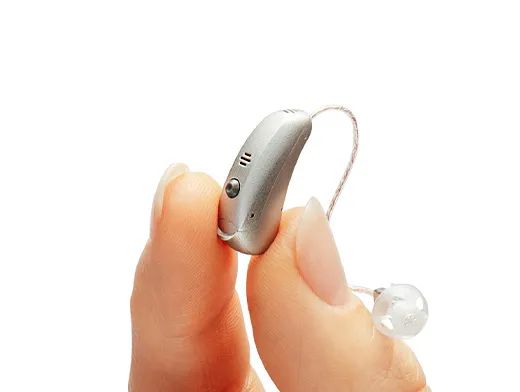
Audible indicator
An audible indicator is a tone (usually a beep) that lets you know which programme is currently being used, that the volume has changed, and when the battery is low. So you don’t need to worry about checking.
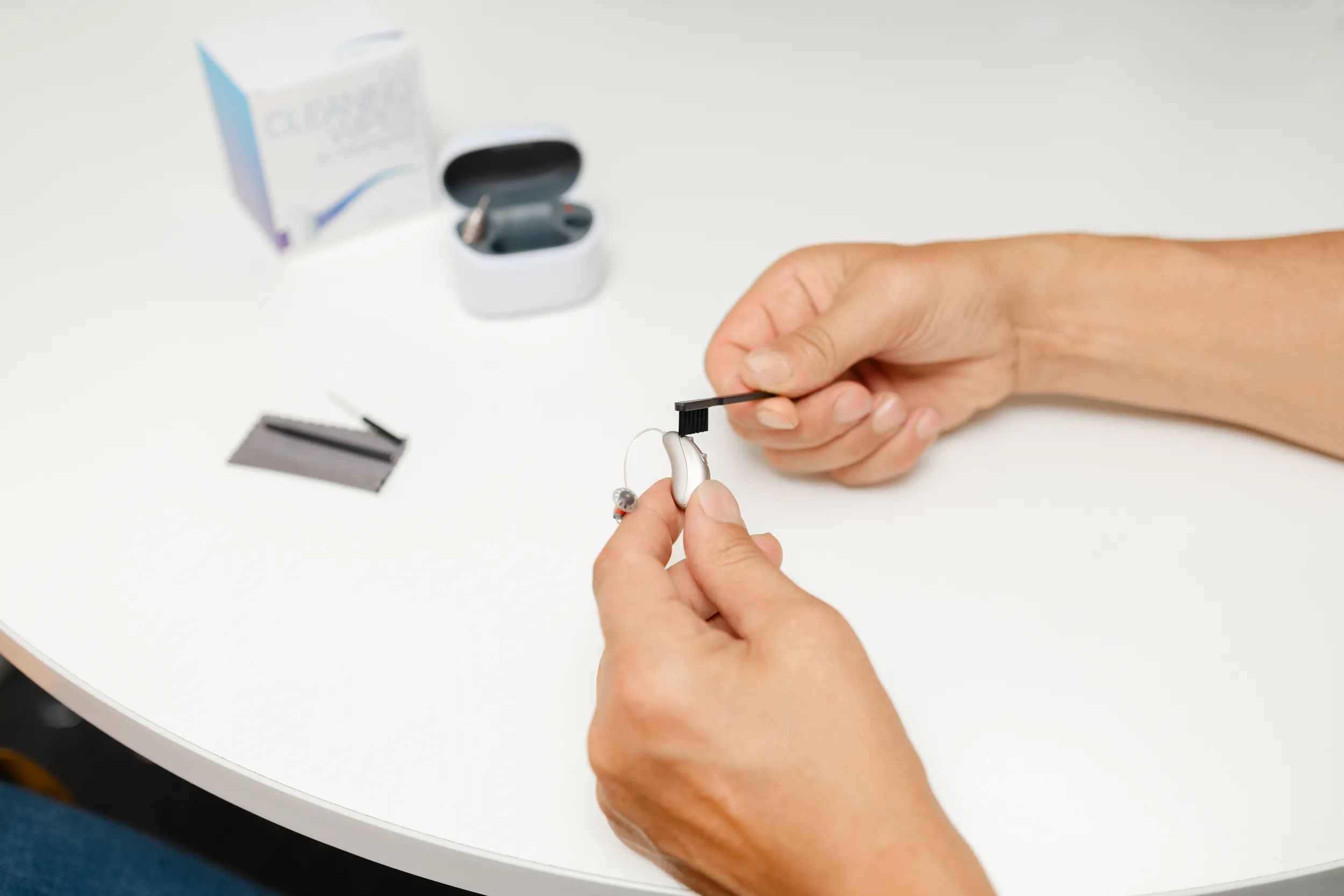
Compression channels
Unlike frequency channels, which are designed to amplify certain frequencies, compression channels restrict the range of sounds you’re exposed to.A hearing expert will be able to programme your hearing aids to reduce the range of loud noises you would normally be unable to tolerate. This is particularly useful for first-time hearing aid wearers who are used to a certain level of volume.
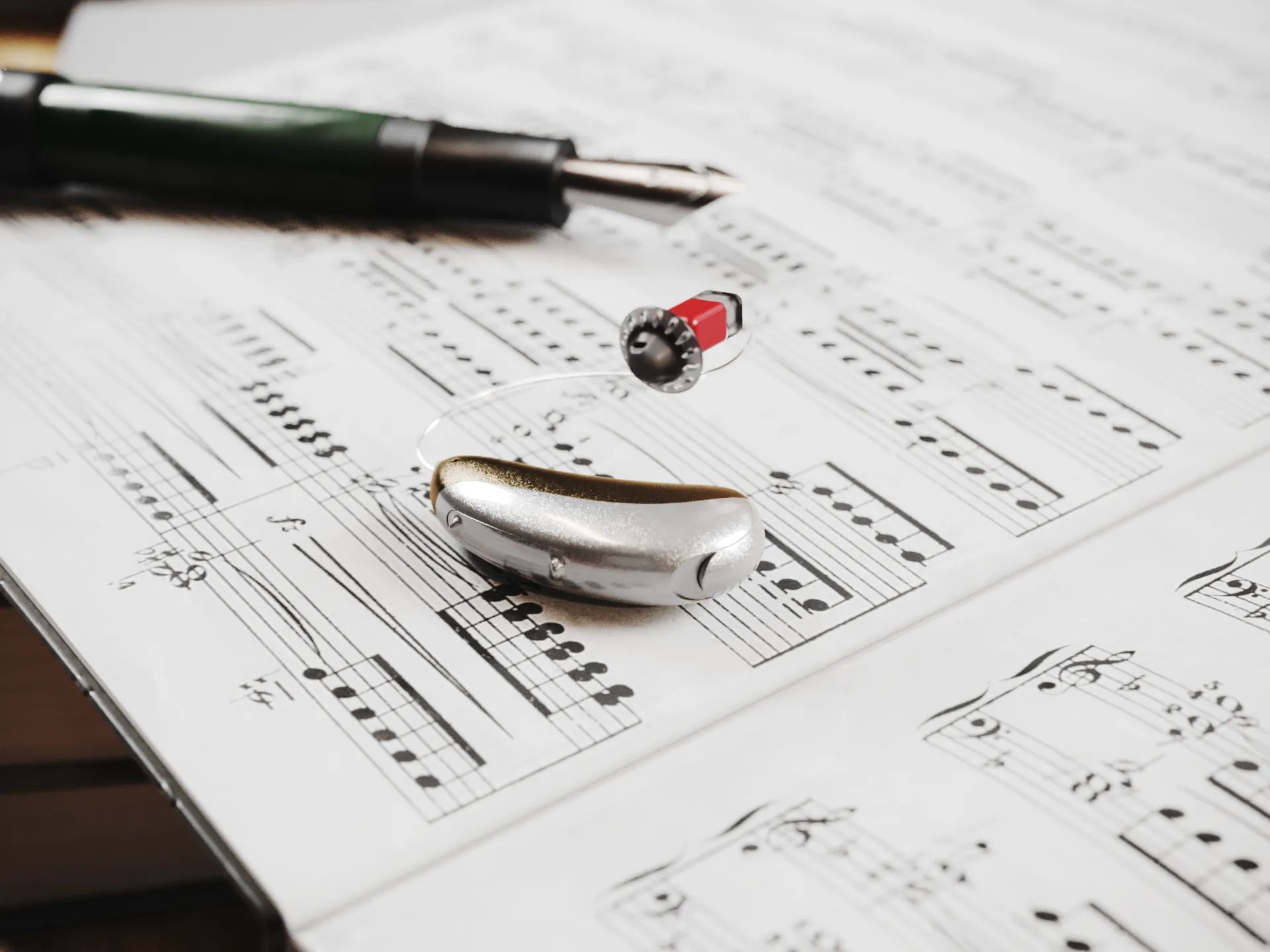
Music equaliser
A personalised music setting that allows the wearer to enjoy listening to music naturally.
What to do next
The first step to finding the right hearing aid is to book a hearing test.
Our experts will be able to help you understand your hearing health, and take you through the options to suit your lifestyle.
For more information book an appointment or visit our hearing resource to learn more.