
Here, we’ll go through what orthokeratology lenses is and how effective corneal refractive therapy can be, through understanding the importance of proper wear and care advice.
About Orthokeratology lenses
Orthokeratology, commonly known as ortho-k, is a nonsurgical procedure where a specific type of rigid gas-permeable contact lens is worn at night to gently and temporarily reshape the cornea — potentially leading to an improvement in vision the following day.1
Ortho-k contact lenses are primarily used for vision correction in people with short-sightedness, but they can also be used for far-sightedness as well as astigmatism. As with all contact lens usage, however, there is a proper aftercare routine to follow to ensure the lenses work effectively and to reduce any risk of eye infection.
What is corneal refractive therapy?
The cornea is a transparent, flexible ‘window’ at the front of the eye which lets light pass through to the retina, where images are formed. The purpose of ortho-k lenses is to reshape the cornea and change how light rays are bent when they pass through, thereby correcting refractive errors.1 Ortho-k lenses are, essentially, an option that can eliminate daytime use of contact lenses or eyeglasses — predominantly for short-sightedness.2
You may also come across the term ‘corneal refractive therapy’ (CRT). It means the same thing as ortho-k, although CRT is a trademark of a contact lens manufacturer. According to that manufacturer, the lenses are suitable for adults and children and can provide 20/40 vision in the majority of users.2
It’s common to find ortho-k lenses being used in children who are short-sighted since their vision continues to change into early adulthood. There are some suggestions that orthokeratology may slow the progression of short-sightedness in children, but this is not yet supported by scientific evidence.1
What type of lenses are ortho-k lenses?
Ortho-k contact lenses are rigid gas-permeable (RGP) lenses. It’s the firm material of these contact lenses that is able to reshape the flexible cornea. However, these technologically advanced lenses still allow enough oxygen to pass through to keep the eyes healthy and comfortable.1


Can orthokeratology be permanent?
No, unfortunately, orthokeratology is not permanent. After ortho-k lenses are removed (usually when you wake up) the cornea remains flattened temporarily and your vision should be corrected for the day. There is no need for your glasses or contact lenses.
To maintain the best results with vision correction, you should continue using the ortho-k lenses every night. If you discontinue their use, the cornea will return to its original shape in a day or two, losing any vision improvement you may have gained.
What are the benefits of ortho-k lenses?
Orthokeratology, simply, gives you freedom from eyeglasses and contact lenses during the day. Those who would benefit the most from these lenses are:3
Children and adolescents with progressive short-sightedness
People under the age of 40 with mild to moderate short-sightedness
Individuals who are not candidates for LASIK vision correction surgery, or are still considering it, but want clear vision without contact lenses or glasses in the meantime
People who work in dusty environments where contact lens use poses a problem
People who want to swim, ski, and participate in sports without glasses or daytime contacts

People who find it difficult to wear contacts due to dry eye, allergies, discomfort, or inconvenience may also benefit. Ortho-K lenses are worn during the night. This greatly reduces dryness as there is little tear evaporation and, as such, can decrease discomfort.
What to expect when wearing ortho-k lenses
- 01
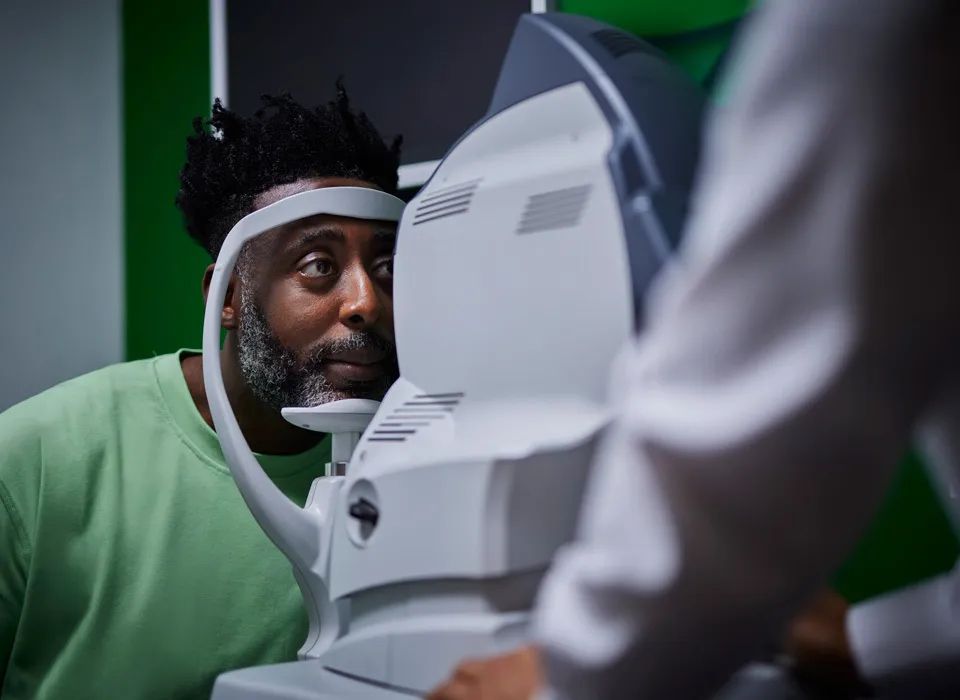
The first step in orthokeratology is a mapping of your cornea. This is done with an instrument called a topographer and is a quick and painless procedure performed by your ophthalmologist.
- 02
The measurements allow your ophthalmologist to design ortho-k lenses specifically for your eyes that will flatten the cornea and correct your refractive error.1
- 03
Once your orthokeratology lenses are ready, there is an initial period of 1-2 weeks during which there should be a gradual improvement in your short-sightedness.
- 04
A series of temporary ortho-k lenses may be required to reach the desired vision correction.3 You may need to wear disposable soft contact lenses during the day, because the time it takes to correct vision varies individually.3 Higher prescriptions can take 2-4 weeks to achieve good vision, whereas some may notice a difference in their vision after just one or two nights of wearing ortho-k lenses.4 Please note that the cornea is easily moulded in children, so treatment time tends to be shorter.
- 05
Following the completion of the initial phase of treatment, you should be able to wear your ortho-k lenses overnight and be able to see well during the day without contact lenses or eyeglasses.
- 06
Ortho-k lenses will need an initial period of adjustment. When you start using them, you may be aware of them in your eyes, but with continued use they will become more comfortable.
Are there any side effects to wearing ortho-k lenses?
The corneal reshaping effect of ortho-k lenses is temporary and so there is little risk involved in wearing them, especially since these will be tailored to your exact corneal shape by your ophthalmologist.
However, since the lenses are left in the eyes overnight, meticulous cleaning and proper storage is necessary to reduce the risk of infection. This is particularly important in children and adolescents who are less likely than adults to follow good hygiene practices.1
There is no time limit on how long you can use orthokeratology lenses. You can use them for as long as you wish. You should, however, visit your optometrist regularly (they will advise on appropriate timings) to ensure the lenses continue to fit properly and your eyes are healthy.

- American Academy of Ophthalmology. What is Orthokeratology? [Online]. Available at: https://www.aao.org/eye-health/glasses-contacts/what-is-orthokeratology (Accessed: 25 Oct 2019)
- Paragon Vision Sciences. Vision Correction with CRT. [Online]. Available at: https://www.paragonvision.com/ (Accessed: 25 Oct 2019)
- Contactlenses.org. Orthokeratology (Ortho-k): Is Corneal Reshaping Right for Me or My Child? [Online]. Available at: https://www.contactlenses.org/orthok.htm (Accessed: 25 Oct 2019)
- The American Academy of Orthokeratology and Myopia Control. FAQs for Patients. [Online]. Available at: https://www.orthokacademy.com/faq-for-patients (Accessed: 25 Oct 2019)
- Insight Vision Center Optometry. (3) How to Apply and Remove Your Orthokeratology Lenses. [Online]. (Accessed: 25 Oct 2019)